Labels

Translate

Friday, 19 December 2014

Creating An Image

Creating an image

The genre, of my chosen artist, is Pop, R'n'B.

And so here is what i planned to use, or incorporate into my video...


Gaining Permission :)

Gaining Permission


In order to comply with current copyright regulations, I must contact the artist, whose music I wish to use, and gain their permission.

I discovered Christina Grimmie had a Twitter page, from her website, and so i contacted her via Twitter.
I am yet to receive a reply !! :)

Tuesday, 2 December 2014

Artist Profile


Artist Profile

Name: Christina Grimmie

Age: 20

Ethnicity: American

Genre: Pop, R'n'B

Number of Members: One

Target Audience: Teenagers


Wednesday, 19 November 2014

Planning Documents - Costumes And Props

Costumes And Props


Planning Documents - Risk Assessment

Risk Assessment


Planning Documents - Location Sheet - EUREKA!!!!!

Location Sheet

I've had an epiphany! I decided I hated my original idea, I thought that it seemed typical, and something expected of a teenager's music video!
Therefore, I have changed the idea completely and have changed some of my location! So, here is my new location sheet! :) 


Planning Documents - Treatment Sheet

Treatment Sheet


Tuesday, 11 November 2014

Elton John & Kiki Dee - Don't Go Breaking My Heart - Lip Synching

Don't Go Breaking My Heart


Whilst shooting this task, we would film whole takes in a specific shot, for example, when singing against the red background, we filmed the whole song at this point, which ensured we had enough footage when editing. Also, whilst filming we tried to incorporate as many different shot types, to make the video more dynamic. As a group we made the choice of using low angle shots, mid-shots, and wide shot.
When it came to editing our footage, we had made the conscious decision of lip synching through the whole takes, as this made it much easier to edit.
During the filming, some of our different shots in different locations, looked almost eye-sore as they were incredibly dull, and a bit ugly. But with our editing, and the amount of shots we had, we did not use this particular shot in the sequence.
I have learned that the filming process of a music video is very different to that of any other task we have filmed, for example the thriller we filmed for last year's coursework. With the music video we have to much longer shots, of the same thing to ensure the lip synching is matched with the backing track. I have also learned that the editing process for a music video is very different, as it has to be edited to match the beat of the song, otherwise the video can look odd.

Wednesday, 5 November 2014

Andrew Goodwin: Key Features Of Music Videos

Andrew Goodwin: Key Features Of Music Videos

Andrew Goodwin in Dancing In The Distraction Factory (1992) has identified the following features of music videos:
  • Music videos demonstrate genre characteristics (eg stage performance in metal video, dance routine for boy/girl band).
Skillet - Monster

In this music video for Skillet's Monster, it very much illustrates Goodwin's theory, that the video demonstrates genre characteristics. For example,  in the video there are close ups of instruments being played, and also the band are playing on a stage-esque area.


Bewitched - C'est La Vie
In Bewitched's video for C'est La Vie, you clearly see Goodwin's theory. It shows us the dance routine that Goodwin states Boy/Girl bands have. The four girls dance in synch all to the same routine.
  • There is a relationship between lyrics and visuals (either illustrative, amplifying, contradicting)
Daniel Powter - Bad Day
This music video represents what is being sung. It shows how to people seem to being having a very bad day, often, just a Daniel Powter is singing.
Paramore - Playing God
In Playing God we see the protagonist playing God with other people's lives. For example she kidnaps them and poisons them. But this doesn't really represent the lyrics. It only really represents the song title.


  • The demands of the record label will include the need for lots of close ups of the artist and the artist may develop motifs which recur across their work (a visual style) For example Michael Jackson and Katy Perry. (to be analysed in seperate blogs).

  • There is frequent reference to the notion of looking (screens within screens, telescopes, etc) and particularly voyeuristic treatment of the female body.

In Charli XCX's music video 'Break The Rules', the female body is shown in a way that insists it is only for sexual pleasures. As the girls in the video wear short, revealing clothes and at a point of the video wears lingerie.

  • There is often intertextual reference (to films, TV programmes, other music videos, etc).
In the music video for Paramore's Decode, there are frequent references to the film Twilight. With sequences from the film, or the same setting, from the film, in the music video.

Tuesday, 14 October 2014

Audience Theory and Laura Mulvey

Audience Theory

Reception Theory:
This considered how texts were encoded with meaning/messages by producers and then understood, (deeded) by audiences.
The academic Stuart Hall developed an approach for audiences and their problems and limitations, whilst Hall was at Birmingham University in the 1970's.

Reception Theory is based on the idea that there is no single meaning for any media text.
It focuses on what people see in the media and the meanings they produce. It says that messages from media texts can have a preferred meaning but anyone can have an individual interpretation. Audience readings are affected by variables of age, gender, social status and social context and thus they might not accept the preferred meaning.


Audience Decodes

Producer encodes meaning in the text
>>>>   Dominant or Preferred
>>>>              Negotiated
>>>>            Oppositional

Suture
Classical Hollywood narrative, editing, sound and mise-en-scene 'sutures' or positions the audience in certain ways making only one preferred reading (reception theory) possible, however unconscious the audience is of that position. The theory stems from the literary and film theories.
According to these theorists, the audience 'stitches' itself into a film by relating to characters or world views expressed in a film, and the filling in the temporal and spatial gaps between scenes with our imaginations. This is made all the easier when means, techniques, codes and conventions of film are made 'invisible' by the filmmakers.

Feminist film theory and audiences.

Laura Mulvey published a theory called 'Visual pleasure and narrative cinema' in 1975.
The theory laid out in the article develops as a logical argument from two assertions:

  1. Cinema reflects society
  2. Society is patriarchal

Patriarchy is a social system in which:

  • Males hold primary power
  • Males predominate in roles of political leadership, moral authority, social privilege and control of property
  • Males dominate in the domain of the family, father or father-figures hold authority over women and children
  • It implies the institutions of male domination and entails female subordination
  • Many patriarchal societies are also partrilineal, meaning that property and title are inherited by the male lineage.

The Gaze

Laura Mulvey's argument is based upon the assertion that:- 

'the 'gaze' of the camera is the male 'gaze'.

The male gaze is active, the female passive. Within the narrative male characters direct their gaze towards female characters

The Triple Gaze

The spectator is made to identify with the male gaze, because the camera films from the optical, as well as libidinal, point of view of the male character. Thus three levels of the cinematic gaze - camera, character and spectator - that objectify the female character. (TRIPLE GAZE)

Examples

Triple Gaze in Die Another Day

Audience > Camera > Pierce Brosnan > Halle Berry


Triple Gaze in Dr No

Audience > Camera > Sean Connery > Ursula Andress


Triple Gaze in Transformers

Audience > Camera > Shia LeBoeuf > Megan Fox


The Audience

The audience is constructed in such a way that they are compelled to 'gaze' from a male point of view. Women are forced to look at the text as though they were a male member of the audience. This occurs through the process of suture.

Agency

In Classical Hollywood cinema the male protagonist has agency - he is active and powerful. He is the agent around whom the dramatic action unfolds. the female character is passive and powerless - she is the object of desire for protagonist and audience. 

Examples - 

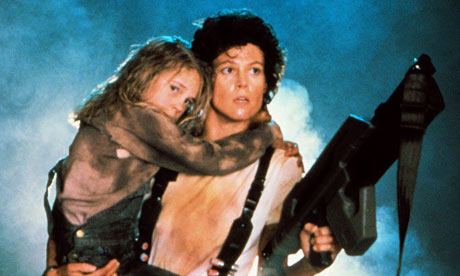
Ripley - Aliens


Katniss Everdeen - The Hunger Games


Tris - Divergent


Mulvey applied to modern music videos.


In Rihanna's Shut Up And Drive,we can clearly place Mulvey's theories and ideas on the video. We see from Rihanna's clothing she is the product of the male gaze, as it reveals ALOT of skin. We see how Rihanna is the embodiment of the submissive female, as the video shows women cleaning cars; which Mulvey may argue is not a skillful task and it would be expected for a woman to do this job. Through much of the video the women are positioned in very sexual positions that can be considered as part of the male power over women.

Friday, 3 October 2014

The History of the Pop Video

The History Of The Pop Video

In our day and age we accept the pop video as 'normal', but up until the 1960's the pop video was did not exist. So, what lead up to the making of the 'pop video', which made things like this key images of the pop video?


In 1940, Bing Crosby was the biggest star in the world. He was a ver y popular  singer, and in order for fans to see him perform it would be in either film, such as 'High Society',(which features Frank Sinatra) or in television specials.
 
High Society - 'Well, Did You Evah'


Then in the 1950's Frank Sinatra, came onto the scene, who unlike Crosby, was the first of many stars, to have girls screaming at them. Sinatra was, also, only seen through television shows, films and concerts. This was the only way his fans, 'The Bobby Sockers' were able to see him.


Soon after, in the late 1950's, the world was struck with the 'indecent' hip thrusting of Elvis Presley. Presley was nothing like Crosby nor Sinatra, which appealed to the 'rebels' and the young girls, as this is considered the birth of rock and roll. However, like Bing and Frank, Presley could be watched on television, in films and concerts, but he only ever had concerts in USA, so the fans from across the globe would have to see him on their televisions, or at the cinema.
 
Blue Hawaii - 'Can't Help Falling In Love'


In the early 1960's, The Beatles were achieving worldwide popularity, they were appearing on television shows all over the world, such as the american show, 'The Ed Sullivan Show'. The Beatles at every moment were greeted by screaming fans, anywhere they went. Soon The Beatles became fed up with all of the touring, across the globe, and the huge amounts of screaming fans they recieved. In order to promote two new songs (Paperback Writer and Rain), they made to videos for the songs, and sent the videos all across the world, to allow fans to see the songs. Which then became the very first pop video.
 
'Paperback Writer' 
 
 
In the video for Paperback Writer, we see almost the basis for modern pop video mannerisms. For example, we see three of the members pretending to play instruments, and miming to the song. Throughout the video, we see quite a few things that aren't really related to the song/lyrics. We see them just in a park-like area singing.
Things that they do in the very first pop video, we see in music videos throughout time.
 
 
Many things we see in the build up to the first music video, and things in the music video, have cemented ideas for videos for today !! 

Wednesday, 1 October 2014

Potential Tracks :)

Potential Tracks

So, after deciding that Christina Grimmie (zeldaxlove64) was my chosen artist. I had to decide a track ! 

I found that Christina has an album, 'With Love'. So, I listened to all the songs.

'With Love' Album Listing

  1. Think Of You
  2. With Love
  3. Tell My Mama
  4. Over Overthinking You
  5. My Anthem
  6. Make It Work
  7. I Bet You Don't Curse God
  8. Get Yourself Together
  9. Feelin' Good
  10. The One I Crave
  11. Absolutely Final Goodbye


After listening to all the songs, I made a note of what I thought about each song. I did enjoy all the songs, and they were good. But I had to consider the songs from a coursework point of view, in that I had to make an interesting, and enjoyable music video. Here are just a few examples of my opinions;


'Think Of You'
I think this is too slow, the song would possibly be boring to watch.

https://www.youtube.com/watch?v=EBQrv2lLyvQ&index=1&list=PLxoDQ-VIRfb_U0wY92EaXtYJACa_Tc22A


'Make It Work'
I like this song, it is of a good pace/tempo, but I just didn't enjoy as much as other songs.

https://www.youtube.com/watch?v=BZB8Ot2STH0&index=6&list=PLxoDQ-VIRfb_U0wY92EaXtYJACa_Tc22A&spfreload=1


'Feelin' Good'
I very much enjoyed this song, I felt that the pace/tempo was of a good speed. Basically i just enjoyed the song. PLUS - it's quite catchy, which is always a bonus !!

https://www.youtube.com/watch?v=DTwdL6jp0C8&index=9&list=PLxoDQ-VIRfb_U0wY92EaXtYJACa_Tc22A 


SO, it's official !!
My chosen track is 'Feelin' Good' by Christina Grimmie (:

Looking For An Artist !!

Looking For An Artist

In order to produce a music video for Media Studies A2, i need to find an unsigned artist, with a good song, with a suitable pace to it. So, something that isn't too slow, as i believe it wouldn't be a particularly interesting video, with long boring shots.Typically of someone looking sad, and looking out of a window, with rain. Which i find horrendously boring.


Firstly, I went onto Youtube, and searched for unsigned artists.

<<<<<<


I then clicked around on different  artist, listened to various men, women, groups. i also found that i was listening to all types of music; pop, rock, alternative, r'n'b.


I found Tiffany Alvord !!

<<


I found Natalie Lungley !!

>>


I liked all the artists that I found, they were all really good.

BUT

I then came across Christina Grimmie, also known as zeldaxlove64(youtube), who I really liked !!

So, I decided, after ALOT of listening, i decided to select Christina Grimmie, as my artist. Now I've just got to decide the song !!

Wish me luck :)


Purpose Of A Music Video; with reference to Synergy

Purpose of a Music Promo Video with special reference to
Synergy
Purpose;
Promotion/Publicity
Make money - increase sales
Synergy (

the interaction or cooperation of two or more organizations, substances, or other agents to produce a combined effect greater than the sum of their separate effects.)

The music video exists as only one strand of a multimedia campaign, and is just one way in which a song is promoted.
The music industry as a whole has a relationship with a number of different media; Radio, Television, Print Media (articles etc.), Film, New Media( social media etc.).
There is often a clear sense of synergy across a number of platforms eg Film.


For Example;
Bryan Adams - (Everything I Do) I Do It For You, Robin Hood Prince Of Thieves
Analysis
In this video, we see many scenes of the film intergrated into the video, along with parts of the singer, Bryan Adams. Also the video is on on the same, or similar, location to the film, 'Robin Hood Prince Of Thieves.'


 Adele - Skyfall, Skyfall
Analysis
In this music video, it is solely scenes from the movie shown. Never is the singer, Adele, shown, this could possibly be because Adele, a larger lady, does not fit the image of the 'Bond Girl' slim and attractive.

In both of these music videos the music videos, it very much promotes the film, particularly in 'Skyfall by Adele'.

Music videos can also promote television shows.


For example, the television show 'The Choir', arranged a choir of 'Military Wives' (women whose husbands serve in the Armed Forces). For this choir a song was written, and when the music video, consisted of clips from the programme, as well as including the choir singing.


Monday, 22 September 2014

Types Of Bands

Types Of Music

Broadly, music can be placed into two catergories;

Organic
Synthetic

Organic
The term 'organic' is used to describe bands where the music comes first, they make the kind of music they want to make and then the record labels, if signed, try and sell this music to the correct market segment.
'Organic' music often appeals to a niche, but can appeal to a mass audience too.
Radiohead, or my favourite band Paramore, are a good examples of organic band. The music comes first!

The Beatles would heavily be considered an 'organic' band. This is because the whole group, have always displayed and truly had a love for music. From John Lennon and Paul McCartney meeting at a church fete, to the group's appearance on the Ed Sullivan Show in America, the Beatles would, the majority of the time, stick to writing and performing their own songs. Thus highlighting the bands organic roots, as they released what they wrote, not what the record label had written for them. A bonus of The Beatles success was the fact that they were friends from the very beginning, and were able to share success as friends.

A modern day example of a band I would catagorise as 'organic' is Paramore. The group now consisting of Hayley Williams, Taylor York and Jeremy Davis, met at an after school club for musicians, and now, the alternative rock band, now release what the band want. For example, recently Paramore released a 'pop-ish' song, which brought them much criticism, but they defended themselves by saying , 'it felt right'. Which, in my opinion, cements very much their 'organic' roots.


Synthetic
The 'Synthetic' refers to the 'X Factor' methodology, and it is the record labels that sit in the driving seat.
A gap in the market is identified, and then it is exploited by the development of music, and often the artist, to suit this gap.
Money is the uktimate goal in this operation. Acts such as 'One Direction' are a good example of 'manufactured' artists.

The Monkees, were a synthetic band, as they were admittedly made as American competition for The Beatles. The Monkees' record label was the puppetmaster, who wrote the songs and told them, ultimately, what to do. Towards the end of The Monkees' career, they began attempting to have some say, but this never really happened. The Monkees were purely a money making machine for the record label. The Monkees were young boys, who were just put together and so weren't friends and didn't get on quite like the Beatles.


A 21st Century 'Synthetic' group is 'One Direction'. The group was put together by Simon Cowell, and X Factor. The members were picked by the record label, and made into what the label and market wanted. The label, will often employ songwriters for the group. Recently, the group has begin to crack, as the boys have had to become friends, rather than being friends before 'One Directions' success.


Foo Fighters Animatic

Foo Fighters - The Pretender

What we had to do?
As a class, we had to watch the Foo Fighters - The Pretender music video, and on a storyboard sheet, we had to draw each exact shot. We had to watch closely, in order to catch all the different shots.

What we learned by doing this?
I learned how to use the new editing software, Adobe Pro. I also learned that a music video can have a huge number of shots, in the first 30 seconds.

How is editing a music video different to a thriller?
Again, there is a lot of different shots in a few seconds, so I have to make more cuts. It is also different because we have to match the music with the pictures, and when doing our actual music video, we will also have to match the lip synching to the music.


Record Labels

Record Labels

The music is industry is dominated by four multi national corporations;

  • Universal
  • Sony Music
  • Warner Brothers
  • EMI

Major-Independents

Most of these 'maors' own, or license, a series of smaller subsidiary companies in order to reach different kinds of audiences in different kinds of genre.
  • Columbia
  • Island
  • Syco
  • RCA
  • Virgin

Independents

There are a huge number of small companies with little or no financial connection to the majors. These companies often concentrate on a small number of acts, within specialised niches in the industry. These are called 'Independent'. An example of a highly successful independent record label is 'Domino Records'. It is often that record labels start small independents but then are brought by a major and then become a major-independent.

Artists
Here are a few artists that are currently signed, or have been signed by the record label;

Majors:

Universal
  • Cheryl Cole
  • Maroon 5
  • Psy
Sony Music
  • Beyonce
  • Calvin Harris
  • Oasis
Warner Brothers
  • Biffy Clyro
  • Jason Derulo
  • Cher
EMI
  • Snoop Dog
  • Elvis Costello
  • Mariah Carey
Major-Independents:

Columbia
  • AC/DC
  • Kasabian
  • Lucy Spraggan
Island
  • Etta James
  • The Killers
  • Lionel Ritchie
Syco
  • Westlife
  • Cher Lloyd
  • Ella Henderson
RCA
  • Miley Cyrus
  • Dido
  • Whitney Houston
Virgin
  • KT Tunstall
  • Queen
  • Bastille


Friday, 19 September 2014

Narrative

Narrative:
The way in which the story is organised.

Elements of Narrative:
  • Time - how much time is covered
  • Enigma - what, why, when, who, where, how?
  • Closure - solve all the enigmas for closure, -> if unsolved the text is open.
Classic Hollywood Narratives:
  • Linear
  • Few, if any, sub-plots
  • Tendency towards closure
Tzvetan Todorov's Theory;
Equilibrium, Disruption, Resolution, New Equilibrium.


  • Equilibrium - everything is normal, characters are happy and there are no problems.
  • Disruption - there is a a disruption, that causes problems for the characters.
  • Resolution - the disruption, or problem, has been dealt with and there is no longer a disruption.
  • New Equilibrium - the difference between the old equilibrium and the new equilibrium is that, the characters have developed, and learned from the disruption.

Roland Barthes' Theory;
Barthes described all texts as complex 'bundles' of meaning which can be unravelled to create a whole range of different meanings.
Texts can be:
OPEN - numerous 'threads to pull'
CLOSED - only one obvious thread to grasp
POLYSEMIC - texts can be read in a number of ways.

For example; Inception

Vladimir Propp's Theory;
8 Key Character Roles:
Hero (Protagonist)
Villain (Antagonist)
Donor (Provider)
Helper
Father
Dispatcher
Princess
False Hero


In applying these narrative theories to my Thriller I have found that our film;

-follows a Linear sequence, the film follows the events over two days, in the order that they happen, there are no flashbacks or flash-forwards.
-if we shot the rest of the film, I believe that our film would follow Todorov's theory, in following the Equilibrium, Disruption, Resolution, New Equilibrium.
-the equilibrium would be before the female is kidnapped, the disruption is the agent getting shot, the resolution would be to either have revenge, and the new equilibrium would be when the Mafia boss and the double crossing agent is dead, or arrested.

Stan - Eminem


Todorov's theory cannot be applied to 'Stan' as it has an equilibrium, the scenes where Stan and his pregnant wife live their lives. The disruption begins when Stan becomes irritated by the fact that his idol, Eminem, hasn't replied to his letters, as this leads to Stan killing himself and his wife, who is played by Dido, in a car accident. The reason Todorov's theory cannit be fully applied to 'Stan' because there is no resolution, and therefore there cannot be a new equilibrium. It may be argued that the resolution is that Eminem feels guilty for not replying to Stan's letter, and does eventually reply. The new equilibrium could then be when Eminem realises that Stan killed himself and his wife, and feels remorseful, but I still believe that Todorov;s theory cannot be applied to this music video.

Roland Barthes' theory can be applied to 'Stan' because there are many questions to be asked throughout the video, such as 'Why is Stan so obsessed with Eminem?' or 'Why does Stan put his wife in the boot of the car?'. I believe this music video is an open text, as we never fully understand why Stan did the things that he did, or never are the questions we have become answered.

Propp's theory can again only be slightly applied to 'Stan', this is because there are only a few of the 8 key character roles within this narrative. Through Stan's eyes, he himself is the Hero, and both Eminem and Stan's wife are the villains. This is because Eminem is 'ignoring' Stan, and therefore he is villainous, Stan's wife is also the villain. This is because she doesn't understand the obsession Stan has, and consequently isn't happy with Stan. From the audience's perspective Stan is quite the opposite, as it could be argued Stan is the antagonist, or the villain, for he develops into a murderer. Also from the audience's point of view the wife is the princess, for she is in need of saving from her husband. The audience also learn how despite Eminem's inability to respond to Stan was not through choice, but through lack of free time, and therefore Eminem is not the villain.